Skip to content


Lower back pain, stiffness, or nerve-related symptoms can develop when one vertebra slips out of position over another, a condition known as spondylolisthesis. This spinal misalignment can place pressure on nearby nerves, leading to pain, numbness, or weakness that may worsen over time. Spondylolisthesis is often caused by age-related arthritis, stress fractures, or degenerative changes in the spine, and symptoms can vary based on the severity of the slippage.
Saville Spine Institute in Palm Beach Gardens, FL, provides comprehensive care for spondylolisthesis using both non-surgical and advanced surgical treatments. Our team is led by board-certified spine surgeon Dr. Philip Saville, and our practice is recognized for its careful evaluation process and patient-focused approach to restoring spinal stability and function.
What Is Spondylolisthesis?
Spondylolisthesis is a spinal condition in which one vertebra slips forward relative to the vertebra below it, potentially causing back pain and nerve compression. The condition may be classified as stable or unstable, determined by flexion and extension X-ray views that assess movement between vertebrae and help guide treatment decisions.
Isthmic spondylolisthesis often begins in childhood due to small, unrecognized fractures in the pars interarticularis that fail to heal, most commonly at the L5/S1 level. Degenerative spondylolisthesis typically affects older adults and results from arthritis weakening the facet joints, most often at the L4/5 level.
Spondylolisthesis Symptoms
Spondylolisthesis often causes symptoms like:
How Is Spondylolisthesis Diagnosed?
Diagnosing spondylolisthesis involves looking at both your symptoms and the structure and stability of your spine. Your evaluation may begin with a review of your medical history, symptoms, and any limitations you experience with walking, standing, exercise, or other daily activities.
A physical examination can assess your lower back and, when nerve involvement is suspected, may include testing your muscle strength, sensation, reflexes, and walking pattern.
Imaging may also help determine the type and severity of the condition:
- Standing X-rays: Show the position of the vertebrae, degree of slippage, and overall spinal alignment.
- Flexion-extension X-rays: Compare the spine in different positions to identify abnormal movement and determine whether the affected segment is stable or unstable.
- MRI: Provides detailed images of the discs, spinal nerves, and other soft tissues to identify nerve compression or narrowing around the nerves.
- CT scans: Provide detailed views of the bones and may help evaluate the vertebrae or a defect in the pars interarticularis.
We consider imaging findings together with your symptoms and physical examination. This helps determine whether the vertebral slip is actually contributing to your symptoms and which treatment approach may be appropriate.
Why Does Spinal Stability Matter in Spondylolisthesis?
The amount a vertebra has slipped does not tell the whole story. A slipped vertebra may remain relatively stable, meaning there is little abnormal movement between the affected spinal bones. In other cases, the vertebrae may move excessively when the spine bends forward or backward, indicating instability.
Knowing whether spondylolisthesis is stable or unstable can play an important role in treatment planning. When the spine is stable but a nerve is compressed, decompression surgery may sometimes be considered to create more room for the affected nerve. When significant instability is present, spinal fusion may be needed to stabilize the vertebrae in addition to relieving nerve pressure.
Treatment decisions are not based on stability alone. We consider your symptoms, degree of nerve compression, neurological findings, imaging results, and overall spinal alignment to determine the most appropriate approach.
Spondylolisthesis Treatments
Saville Spine Institute may recommend any or all of the following treatments to patients.
Anterior Lumbar Interbody Fusion (ALIF)
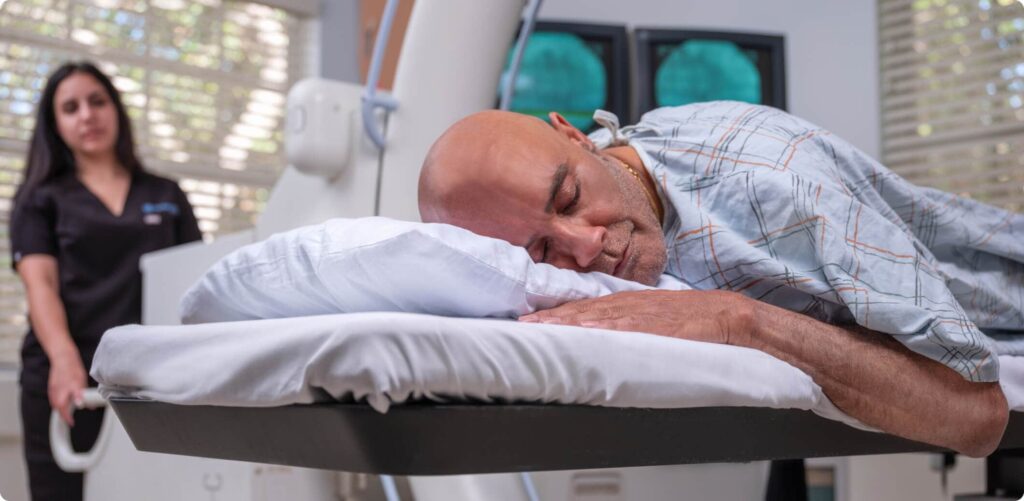
ALIF treats spondylolisthesis by stabilizing the spine through an anterior approach. The damaged disc is removed and replaced with an implant to restore alignment and promote fusion, helping relieve nerve pressure while avoiding disruption of the back muscles.
Minimally Invasive Lumbar Fusion
Minimally invasive lumbar fusion stabilizes a slipped vertebra using small incisions and specialized instruments. This approach limits muscle disruption while securing the spine, helping reduce pain, restore stability, and support a smoother recovery.
Minimally Invasive Lumbar Decompression
Decompression surgery relieves pressure on spinal nerves by removing bone, ligament, or disc material that compresses them. It may be performed alone in stable cases or combined with fusion when instability is present.
Epidural Injections
Epidural injections deliver anti-inflammatory medication around compressed spinal nerves to reduce pain and irritation. They are commonly used to manage symptoms of spondylolisthesis and may provide temporary relief while other treatments are considered.
Why Choose Saville Spine Institute for Spondylolisthesis Treatment in Palm Beach Gardens, FL?
Saville Spine Institute offers comprehensive care tailored to both stable and unstable forms of spondylolisthesis in Palm Beach Gardens, FL. Our patients have access to non-surgical care as well as advanced surgical options, including minimally invasive and motion-conscious techniques when appropriate.
The board-certified surgeons at Saville Spine Institute are known for thoughtful decision-making, technical skill, and a patient-centered approach. We are committed to restoring stability, relieving nerve pressure, and supporting long-term spinal function.
Frequently Asked Questions
Here are answers to some of the most common questions patients ask about spondylolisthesis and osteoporotic fractures.
Whether or not you need a fusion depends on the spine’s stability and the type of spondylolisthesis you have.
In most cases, you can go back to sports and other activities you enjoy if you follow your surgeon’s guidance and recovery instructions.
Usually, once the spine starts to slip, it continues to progress over time due to gravity. As the slip worsens, the nerve compression also gets worse.
Yes, often patients with long-term back pain have an isthmic spondylolisthesis that was caused by childhood sports.
Spondylolisthesis can develop for several reasons, depending on your age and the type of spinal condition. Isthmic spondylolisthesis often begins with small stress fractures that occur in childhood and fail to heal, while degenerative spondylolisthesis is usually caused by age-related arthritis and wear of the spinal joints.
During your evaluation at Saville Spine Institute, we identify the underlying cause of your condition so we can recommend the most appropriate treatment.
At Saville Spine Institute, we evaluate whether your spondylolisthesis is stable or unstable using a physical examination, imaging studies, and flexion and extension X-rays that show how your vertebrae move. This information helps determine the severity of the condition and guides your personalized treatment plan.
Yes. Many patients begin with non-surgical treatment, depending on the severity of their symptoms and the stability of the spine. Options may include epidural injections, activity modification, and other conservative measures to help relieve pain.
If these treatments no longer provide adequate relief or instability is present, surgery may be recommended.
Surgery may be appropriate if your symptoms continue despite conservative treatment, if nerve compression is causing significant pain or weakness, or if imaging shows spinal instability.
Our team carefully evaluates your symptoms, imaging results, and overall health before recommending the treatment that best fits your condition.
Physical therapy may help some patients improve strength, flexibility, and spinal support while reducing pain. Whether it is appropriate depends on the type and severity of your spondylolisthesis, your symptoms, and the stability of your spine.
We can recommend the most appropriate treatment approach after a comprehensive evaluation.
Yes. When a slipped vertebra compresses nearby spinal nerves, it can cause pain, numbness, tingling, or weakness that radiate down one or both legs. These symptoms are commonly associated with sciatica and should be evaluated to determine the underlying cause and appropriate treatment.
Activities that place excessive stress on the lower back, such as heavy lifting, repetitive bending, twisting, or high-impact sports, may worsen symptoms for some people. The activities you should avoid depend on the severity of your condition and your symptoms.
Our team can provide personalized recommendations to help protect your spine while keeping you as active as possible.
Seek Help for Spondylolisthesis in Palm Beach Gardens
Saville Spine Institute offers premier, concierge-style treatment for spondylolisthesis and other spinal conditions. Book your consultation today by calling (561) 630-3870.